
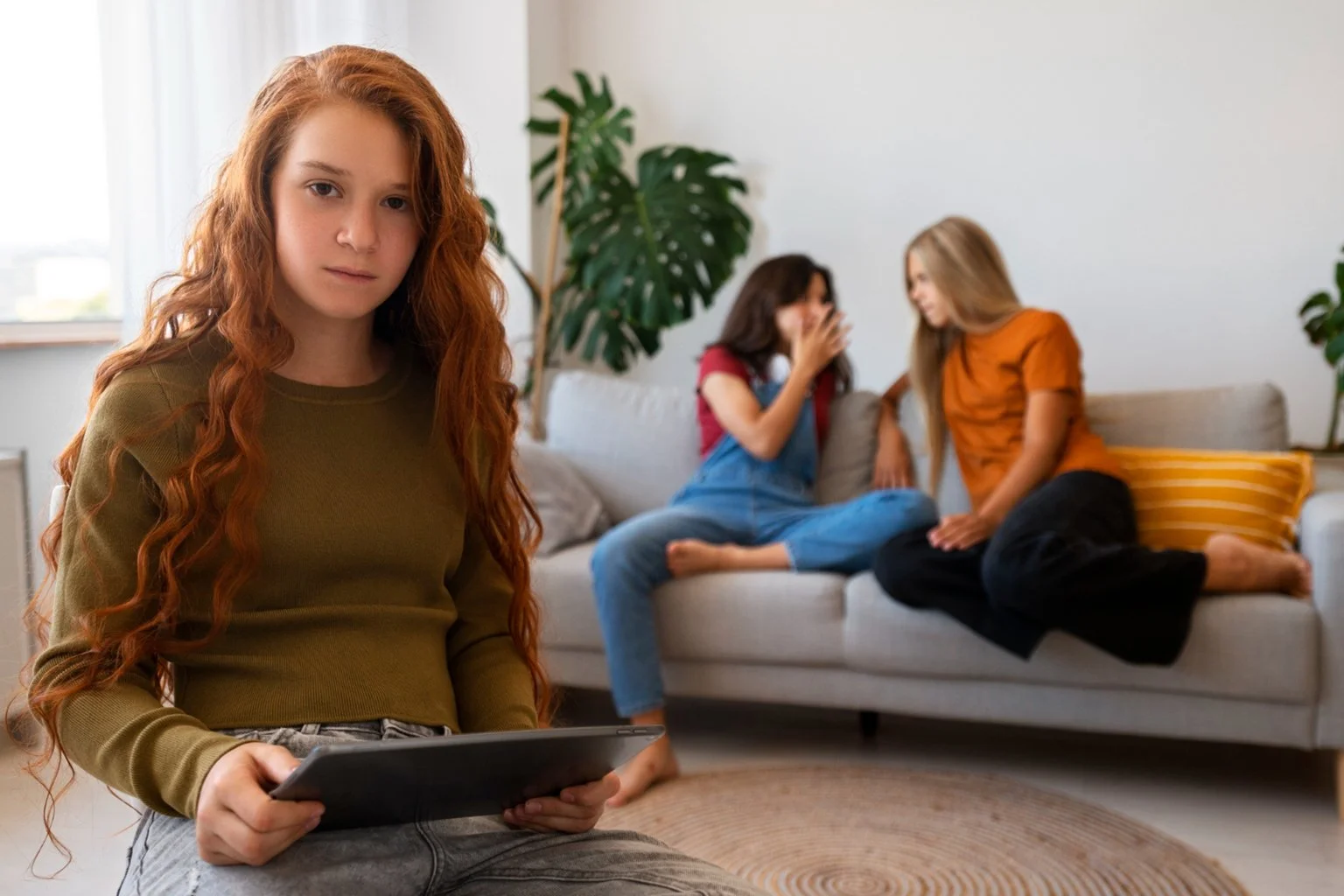
Do you stay away from parties because you actually want to spend a peaceful evening at home, or because the idea of being seen and judged makes your stomach turn? That one question lies at the core of social anxiety vs introversion, two traits that are so frequently confused that many people spend years misinterpreting their own thoughts.
One aspect of personality is introversion. It explains how you receive your energy and how spending time alone replenishes it. In contrast, social anxiety is a fear-based mental health disorder. According to the National Institute of Mental Health, social anxiety disorder is one of the most prevalent anxiety disorders in the United States, affecting roughly 12.1% of adults at some point in their lives. However, a lot of introverts are mistakenly classified as nervous, while a lot of nervous people think that introverts are just shy or reserved.
In this blog, you will learn about the key distinctions, the driving forces behind each, and when it might be appropriate for you to explore social anxiety therapy that Miami offers.
The tendency to confuse the two is not a recent development. For many years, people who are quiet or reserved have been perceived as shy, distant, or just "hard to read," but in actuality, their inner experiences might range from true fear to serene contentment. Making this difference correctly is important because the solutions appear entirely different depending on which one you are dealing with.
What Is Introversion, Really?
Introversion is an extreme point on a spectrum where one can be either introverted or extroverted. These concepts were developed by Carl Jung almost a hundred years ago and further elaborated upon by psychologists like Hans Eysenck who correlated this concept with brain sensitivity to stimulation.
The fact is that introverts are just different in their approach to perceiving the environment. Social events do not exhaust introverts because they are scared of being in such environments; it’s rather due to the fact that they require too much energy for an introvert. After attending a social event for a long time, introverts usually need some time alone to restore energy.
Quick Fact: Roughly one-third to half of the population identifies as introverted, according to widely cited estimates from personality researchers, which means introversion is common, not a disorder.
Introverts can still enjoy people, hold deep friendships, and speak confidently in front of a room. They simply prefer smaller, more meaningful interactions over large crowds, and they don't fear judgment while doing so.
What Is Social Anxiety?
Social anxiety disorder, often known as social phobia, is a diagnosable mental illness. It entails a strong, enduring dread of being observed, assessed, humiliated, or embarrassed in social or performance contexts. Long before the event actually occurs, this fear frequently manifests.
When social engagement becomes inevitable, a person with social anxiety may wish to go to a birthday party, a business meeting, or a first date, but their body reacts with a racing heart, perspiration, nausea, or a total mental blank. It's common to feel the need to connect. It is only subordinated to the fear.
If left untreated, social anxiety can subtly reduce a person's world, impacting relationships, jobs, and even everyday tasks like placing a phone call or placing an order for coffee. This contrasts sharply with introversion, which finds solace in solitude rather than anxiety before to social interaction.
Social Anxiety vs Introversion: Key Differences
Because both can look like "avoiding people," it helps to compare them side by side.
| Aspect | Introversion | Social Anxiety |
|---|---|---|
| Root cause | Personality trait, how energy is used | Fear-based mental health condition |
| Feeling before socializing | Neutral or mildly reluctant | Dread, panic, or physical symptoms |
| After socializing | Tired, needs quiet time | Relief, but often followed by overthinking every interaction |
| Desire to connect | Selective, prefers small groups | Often wants connection but fear blocks it |
| Impact on life | Minimal, just a preference | Can interfere with work, school, and relationships |
| Treatable? | Not a disorder, nothing to "fix" | Yes, responds well to therapy and, when needed, medication |
This table captures why social anxiety vs introversion is such an important distinction to understand. One is simply a way of being. The other is a condition that can genuinely improve with the right support, similar to how our guide on social anxiety disorder and the fear of judgment explains in more depth.
Why People Confuse the Two
Both introverts and individuals with social anxiety will cancel plans, remain silent in crowds, and choose text messages over phone calls. In this way, the two conditions present very similar symptoms. It is exactly the similarity in the symptoms that causes frequent confusion between the two.
But what really makes the difference is the reason behind the action. The introvert misses the party because they are more attracted to a quiet evening. At the same time, an individual with social anxiety is afraid of making a mistake and being criticized. This fear occurs in spite of the fact that part of them would really want to attend the party. There is a simple trick to check which one applies. Ask yourself if you would rather spend that time resting or if you see only a possibility for things to go wrong. The answer will show which type is yours.
Cultural expectations can be another factor causing misunderstanding. Western culture prefers extroverted features such as outspokenness and sociability. This is one reason working with a licensed therapist matters, since a proper evaluation through our anxiety therapy services can clarify what's actually happening rather than guessing based on outward behavior alone.
When Should You Seek Help?
Not every quiet moment needs professional attention, but certain signs point toward something more than simple introversion.
You avoid social situations out of fear rather than preference
Physical symptoms like sweating, trembling, or a racing heart show up before events
You replay conversations for days, convinced you embarrassed yourself
Work, school, or relationships have suffered because of avoidance
You want to connect with others but feel physically unable to
If you find yourself recognizing more than a couple of these descriptions, it might be time for you to look into social anxiety therapy Miami can provide, because all of these symptoms indicate an anxiety problem rather than a personal characteristic.
What's In It for You?
Knowing your own truth and having an understanding of your situation means not blaming yourself anymore for being “too sensitive” or “antisocial.” It allows you to find a way out, and either respect your right to solitude or finally heal from the illness you've been suffering from.
Where to Find Support in Miami
Miami's busy schedule, social calendar, and social-networking environment can be particularly isolating for those suffering from social anxiety, because the majority of one's daily life involves attending various events and constantly interacting. It is imperative to find a therapist who is experienced not only with anxiety but also with the lifestyle of the area.
The therapists at Psych Blossom help high-functioning individuals of Miami comprehend the root of their problem and distinguish between an actual wiring preference and a psychological disorder such as social anxiety.
Quite often, many of our patients come in self-diagnosed as "just being introverted." They do not understand until after a few therapy sessions that fear, and not preference, has been guiding them all along.
How Anxiety Counseling Miami Can Help
Effective treatment typically blends a few evidence-based approaches:
Cognitive Behavioral Therapy (CBT), which helps identify and reframe the distorted thoughts that fuel social fear
Exposure-based techniques, which gradually build tolerance for feared social situations in a safe, guided way
Skill-building, which strengthens communication and self-esteem so social interactions feel less threatening over time
Session goals begin at low pressure, such as small talk with a barista, before progressing to more difficult tasks, such as speaking up in a meeting or remaining through an entire social gathering without fleeing. The change occurs incrementally and not immediately, but after a few months of therapy, most clients have seen definite improvement in their level of self-confidence.
Many individuals can distinguish between their actual personality traits and fear-motivated avoidance through anxiety counseling in Miami. If self-esteem struggles are also part of the picture, our self-esteem therapy services can be woven into the treatment plan as well. For those who prefer flexibility, online therapy sessions are also available throughout Florida.
Research published by the Anxiety and Depression Association of America continues to show that a combination of therapy and, in some cases, medication produces the strongest long-term results for social anxiety disorder, reinforcing that this is a highly treatable condition rather than a fixed trait.
Conclusion
Being able to distinguish between social anxiety vs introversion gives you a completely different perspective of yourself. One is just a natural way of being, and one should be respected rather than treated, while the other is a mental issue that can easily be handled with proper treatment. Having an evening at home to recharge your energy is just part of who you are.
If you feel afraid of controlling your social interactions, there is something you can do about it. Reach out to Psych Blossom today and take the first step toward understanding what's really going on and toward feeling more like yourself again.
FAQs
Is social anxiety just extreme introversion?
No. Introversion is a personality type with the key feature being energy preferences; social anxiety, on the other hand, is a fear-based problem. Social anxiety vs introversion comparison indicates that the two differ drastically in origin, despite seeming alike.
Can an introvert also have social anxiety?
Yes. These two things can most certainly coexist. One can be an introvert and also suffer from the anxiety and physical reactions of social anxiety disorder at the same time; another reason why professional assessment is needed when determining social anxiety vs introversion.
Does social anxiety go away on its own?
Most individuals get the best outcomes from organized interventions like those offered in social anxiety therapy Miami experts conduct, as opposed to just allowing their condition to resolve naturally.
How do therapists tell the difference between the two?
A licensed therapist determines whether the avoidance is based on preference or fear, the amount of distress, and interference in everyday activities among key considerations when making a distinction between social anxiety and introversion.
